
What Is Our Mission?
Dream, Build and Inspire!
The University of New Brunswick Aerospace Society is a passionate and forward-thinking group of students dedicated to advancing aerospace innovation through hands-on engineering, research, and national competition. Guided by the mentorship of highly qualified professionals, our society blends academic knowledge with real-world application, while helping members develop the technical and leadership skills essential to their future careers.This year marks an exciting chapter for the UNB Rocketry Society as we prepare to compete on multiple national stages:Zaphod (Launch Challenge) — a high-powered rocket engineered to reach 10,000+ feet, developed for competition at Launch Canada, where our team will showcase advanced propulsion, recovery, and structural design.Vortex — an aerial drone being prepared for the Unmanned Aerial Systems (UAS) Competition, because flying drones are cool, and building them is even better!Rocket Engine Project (Technology Development Challenge) — Details still in the works, stay tuned!At the end of the academic year, our team will publish scientific and technical results, contributing to Canada’s growing aerospace community and inspiring future innovators.Our mission is to promote excellence in engineering, collaboration, and innovation. Through these competitive projects, we aim to achieve new milestones and proudly represent the University of New Brunswick across the country.
Sponsor Talented Engineers
Sponsors make dreams take flight.
Your support empowers passionate students to push the boundaries of Aerospace Engineering and Artificial Intelligence — uniting bright minds in the pursuit of innovation, competition, and excellence.Ready to help us reach new heights?
Discover how your partnership can make an impact by exploring our Sponsorship Package below.
Email us at [email protected].
UNB Aerospace Society
Projects
Zaphod Rocket

This comprehensive report details the design methodology, performance characteristics, and technical innovations that make the Project Zaphod a high-power rocket targeting 10 thousand feet.
Vortex
We are building Vortex, a fully functional drone system.
Our hope is to successfully build a Drone that can deliver packages
from one location to another, autonomously.
Solaris
Rocket Engine Project (Technology Development Challenge) — Details still in the works, stay tuned!
The Executives
Victor Habiyambere
President
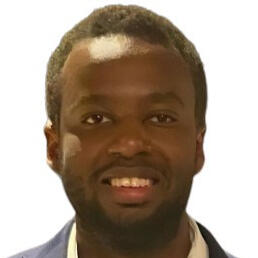
Hi. I am a 3rd Year Mechanical Engineering Student at UNB, pursuing a mechatronics option, math minor and TME (Technology Management and Entrepreneurship) diploma.
Fun fact about me : My favorite sport is competitive swimming.
During my leadership as President of the UNB Aerospace Society, I will promote excellence in engineering, collaboration, and innovation, while inspiring the next generation of aerospace leaders.
Viktor Loberer
VP Finance

Economics and Statistics Major.
I hope to make the club be able to achieve its ambitious goals by finding and searching for funding opportunities that make the club grow and be much more enjoyable for members and everyone involved.
Pranavaditya Naren
VP Engagement

3rd year environmental engineer.
Fun Fact: I can cook a banging butter chicken, I love basketball and tennis
(Lakers in 5).
I hope we finish the project without an issue and in good time, try put in as much effort as possible!
Larry davies
VP Communications

I’m a Third-year Psychology major at the University of New Brunswick.
Fun fact: I once tried to build a rocket out of a soda bottle… it sort of worked—until it launched straight into my neighbor’s yard.
I love psychology and soccer—both involve strategy, precision, and the occasional dramatic comeback.
As VP of Communications for the Rocketry Society, I want to make our projects stand out and get more people excited about what we’re building.
I hope achieve this by using creative posts, fun visuals, and clear updates to keep everyone connected—both inside the team and with the broader UNB community.
Vaibhav krishna Bhatta
VP External

I am a third year accounting major.
Fun fact #1: I used to be a nationally ranked badminton player in India.
Fun Fact #2: My favourite animal is a dog.
I want to be able to achieve cohesion among the team. And I hope to do this by listening to what my team members have to say and work effectively towards anything to be done to achieve success.
Mentors
| Sebastian James Richard | Dr. Hassan Alkomy |
Society Members
| Harsha Jagadev Kumaravel | Hunter anderson | Evan Israel | Martin Lunniss Platt |
| Vaibhav krishna Bhatta | Alhussein Aley | Sadra Nassiri Sheykhani | Emir Ersin |
| Viktor Lorberer | Pranavaditya Naren | Larry davies | Matthew Maloney |
| Paul Fatuberu | Tishant Doorgapersand | Saifalislam Emara | Jaxom Thornton |
| Victor Habiyambere | Tahsin Ali | Nick Bernhardt | Finley Elizabeth Chiswell |
| Hana Butt |
Rocket Flight Certification
Unlock your Rocketry Potential!
Prepare for Level 1 (and beyond) certification while being guided by expert mentors who will help you soar toward your flight certification.
Your journey to the skies starts here!
Cost: Zero Rocket Points
Live Rocket Launch Event
Spring Time
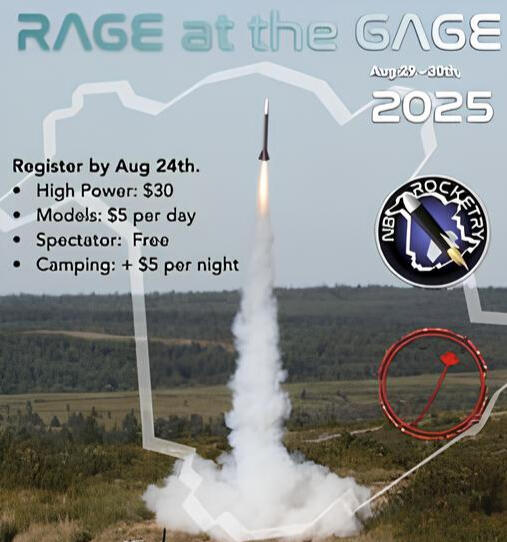
"Rage at the Gage" is
NB Rocketry's premier HPR launch event of the year.
Watch the launch together with the Society!
Get inspired!
Cost: Zero Rocket Points
Aerospace Society Awards Night
February 13th, 2026
Give out awards to recognize the
accomplishments made by our
Society members.
Have a good time
Cost: 10 Rocket Points
Aerospace Society Gala
March 30th, 2026
Where Rocketry Society members
just hang out and talk about
anything, including Rockets! Food will be available too
Cost: 40 Rocket Points
The UNB Aerospace Society is proud to recognize the outstanding efforts of its most dedicated members through the UNB Rocketry Society Achievement Award — celebrating Exemplary Contributions and Exceptional Impact within our growing community.🏆 September's Top 3 Award Recipients are:
1. Nick Bernhardt
2. Pranavaditya Naren
3. Viktor LorbererTheir hard work, leadership, and innovation have propelled the team forward, inspiring the next generation of aerospace leaders at UNB.Since our society’s debut, we’ve welcomed 2 new mentors and 6 new team members, each bringing fresh energy and expertise to our mission. The team is currently conducting research to identify the most cost-effective and high-performance High-Power Rocket Kit to modify — a crucial step toward achieving our ambitious goal of reaching an altitude of 15,000 feet! Alongside this, we are looking for the next best launch event to complete our society's certification flights.With continued teamwork, passion, and engineering excellence, the sky is only the beginning for the UNB Aerospace Society.
Published: October 14th, 2025
Rocketry Stream
Launch Canada Competition
Propulsion
In charge of the Design, Manufactures and Tests Innovative Rocket Engines, such as our Flagship Project "Solaris". Our Rocket Engines will be put to the ultimate test against Rocket Engineering Experts at the Launch Canada Technology Demonstration Challenge.
Aerostructures
Responsible for the analysis, testing and assembly of our Rocket's airframes. At this stage of the Society, we are using Rocket Kits to get accustomed to Rocket Manufacturing, by following the proper protocol and steps to successfully assemble our ideal Rocket. As we gain greater expertise and experience with Rocketry, we will delve into breadth and depth on the design and manufacturing process of proper Rocket airframes.
Payload
Payload sub team members will be challenged to design, integrate, and deploy of scientific experiments within our Team's Rockets. This division partakes in all necessary operations in order to be successful for Launch Canada's Payload Challenge.
Recovery
You will be responsible for designing, testing, and implementing the systems that ensure a safe and controlled descent of the rocket after flight. You will also play a critical role in preventing damage to the rocket upon landing, enabling reuse, and ensuring flight data can be retrieved successfully.
Avionics
Runs the analysis, integration, and testing of all electronic systems within the rocket. Avionic systems play a vital role in flight monitoring, recovery deployment, and data acquisition. As the Society grows its expertise and capabilities, we hope to design and manufacture our own flight computers.
Scientific Report
Looks after the process of documenting the teams engineering accomplishments, by being in charge of writing the teams Preliminary Design Reports and Final Design reports, to submit and publish to the Launch Canada Rocketry Challenge.
UAS(Unmanned Aerial Systems) Stream
AEAC UAS Competition
Mechanical
Responsible for the design, manufacturing and testing of the frame of the Drone. They use CAD software (SolidWorks, ANSYS) to design their parts. Selects the technology (3D Printing, CNC Machining, etc.) to use to manufacture the frame of the drone and work with the rest of the divisions (Electrical and Flight Dynamics) to ensure that the Drone is capable of satisfying the competition objectives.
Software
Responsible for programming the drone's flight controllers to perform tasks involving computer vision, automated data processing, navigation or path planning. In respect to the competition requirements, software is needed to make the Drone come alive!
Electrical
The electrical sub team is vital in permitting the Drone to do any kind of controlled mechanical motion, by giving the drone a power supply. In addition, they are involved in the control and communication to the Drone. Members tests and combines electrical components such as flight controller, batteries, compass, lidar, electronic speed controllers, transmitters and receivers. By joining this sub team, you gain hands-on experience with soldering, RF link design, cable management, actuation and propulsion selection.
Flight Dynamics
This sub team is involved with getting the drone off the ground and keeping it in the air safely. To accomplish this, they make use of PID tuning for the drone using software-in-the-loop and test data, handling the drone's communication systems, and planning out flight tests.
Ejection Charges
-High power rockets use the same basic method of parachute deployment as model rockets
-At preset time after motor burnout, the ejection charge ignites, filling the body of the rocket with hot gas
-This gas over pressurizes the inside of the rocket body, which forces the rocket apart-usually at the nosecone and leads to the release of the parachute
-Ejection charges may be activated by on-board electronics
-Nosecone is connected internally by airframe by a cord or tether
-May be referred to as a recovery harness
-Also contains an ejection charge
-A container of black powder located somewhere in the rocket
-The gas escapes the rocket by taking the path of least resistance
-As the body and cone travel apart, the recovery harness is pulled out of the rocket, deploying the parachute
-The airframe and the nosecone remain connected to each other by the recovery harness as the rocket descends
-The nosecone and airframe may have separate parachutes and they descend independently of one another
Two methods:
1. Motor-based ejection charges
2. Electronic-activated charges
(may use both methods)
-Black rifle powder is made with potassium nitrate
-It is easy to ignite and burns quickly
-Can be purchased in gun stores
-Typically solid in one-pound cans
-Cost less than $20
-Should last a lot of flights
-The type most often used in HPR is designated FFFF-> also called 4F
-Should be handled with care (as it is explosive)
-Store in a cool, dry place and away from excessive heat or open flame
-The delay grain is located between the main propellant and the black-powder charge
-The delay grain burns at a much slower rate than the propellant
High-Power Electronics
-Altimeters also record altitude
-They don't record apogee, but also track and preserve large amounts of in-flight data, including flight acceleration and the timing of in-flight events (e.g, apogee, Mach, burnout rate, etc)
2 types of altimeters: pressure altimeters and accelerometers
-Pressure altimeters operate on the principle that atmospheric pressure decreases with elevation
-Contain aneroid wafers, thin metal canisters sealed with a known pressure reference inside
-A static or outside air source is connected to the altimeter, exposing the wafers to outside atmospheric pressure.
As the rocket climbs or descends, the wafers expand or contract
The altimeter translates these changes into measurements of altitude in feet
Accelerometer altimeters analyze changes in the velocity or acceleration of the rocket
The G-switch must be placed in the rocket in the proper position and orientation to monitor launch and acceleration
-Altimeters offer written instructions, such as "this ends up" "nose end" or "sky" to help with mounting. Usually stamped on the face of the altimeter
-Barometric-pressure altimeters must be vented to outside air to work properly.
Failure to properly vent the altimeter bay can result in false altimeter readings and even early deployment.
They are also susceptible to pressure fluctuations if the rocket's speed exceeds Mach 1.
Leads to early deployment at high speeds.
Accelerometers may not be as accurate in measuring altitude as barometric pressure altimeters.
This is because an accelerometer measures altitude as a function of acceleration and time.
The distance traveled will be equal to altitude if the rocket flies in a perfectly vertical trajectory.
Don't be afraid to ask the manufacturer questions.
Consider how many charges you will need before buying your altimeter.
Some altimeters report altitude with a series of beeps that are emitted after the rocket has been recovered.
Most altimeters allow the rocketeer to fine-tune the altitude at which the main charge will fire.
Many altimeters can be connected to laptop computers so that flight data can be viewed after flight.
Buy more than one altimeter.
Large or complex HPR should always carry more than 1 on-board altimeter.
This is called redundancy.
Because altimeters fail from time to time for a variety of reasons, such as low battery power, improper use, wires coming loose, or a host of other causes.
Always read the instructions.
Always use a new battery on launch day.
If you are not sure of battery strength, do not launch.
A static port allows the barometric function of the altimeter to work properly and provides for rapid pressure equalization between the outside air and the air inside the bay during flight. It must be located on the altimeter bay.
It should be placed as to minimize any air turbulence caused by obstructions forward of the vent.
Screws, ornamental objects, camera parts, and other items that protrude on the outside of the rocket should not be placed immediately forward of the static part.
These objects may cause air turbulence that will interfere with the altimeter. Keep the static port as far away from the nosecone as possible.
If you place electronics in the hatch-access bays between the fins on the rocket, consider the effect of turbulence around the fin area and how it might affect the altimeter.
In big rockets, use several large vent holes. Alternatively, build a smaller, self-contained altimeter bay that simply slides into the large bay of the big rocket.
The sizing of the static port can be determined by calculating the total volume of the electronics bay.
A static port is used in an altimeter bay.
A vent hole is used in an ordinary payload bay.
The ejection charges is usually in the payload bay.